
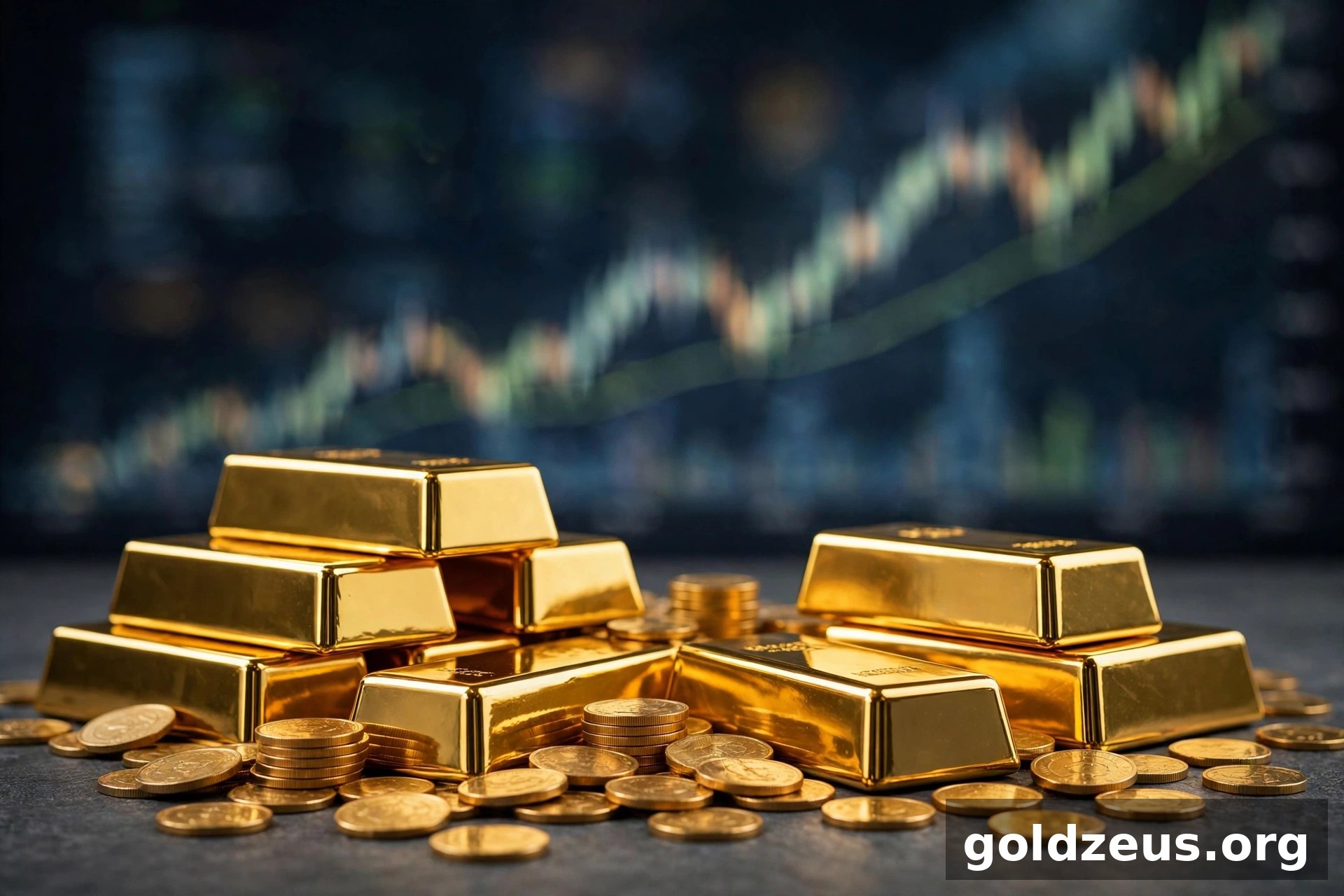
Gold has been money for 5,000 years — and in 2026, it feels more relevant than ever. With prices hovering near record highs, central banks buying at a historic pace, and investors hunting for shelter from market swings, the yellow metal is back at the center of portfolio conversations.
But here’s the thing most beginners miss: you don’t need to buy gold bars and bury them in the backyard. Today, the easiest ways to own gold are gold ETFs (funds that track the metal’s price) and gold stocks (shares of companies that mine it or finance it). Both have very different risk profiles, costs, and payoff patterns.
In this guide, we break down the best gold ETFs and stocks to consider in 2026 — what they are, what they cost, who they’re for, and how to pick the right one for your goals. Let’s dig in.
Quick note: this article is for education only, not financial advice. Always do your own research or talk to a licensed advisor before investing.
Why Investors Are Turning to Gold in 2026
Gold isn’t trendy — it’s timeless. But a few specific forces have pushed it back into the spotlight:
- Inflation protection. When the purchasing power of cash erodes, gold has historically held its value. It’s the asset people reach for when they stop trusting paper money.
- Central bank buying. Central banks around the world have been accumulating gold at one of the fastest paces in modern history, steadily soaking up supply.
- Geopolitical uncertainty. Trade tensions, conflicts, and election cycles tend to send investors toward safe havens — and gold is the original safe haven.
- Portfolio diversification. Gold often moves independently of stocks and bonds. A small allocation (many advisors suggest 5–10%) can smooth out a portfolio’s ride.
With that backdrop, let’s look at the actual vehicles you can buy.
Best Gold ETFs to Buy in 2026
Gold ETFs let you own exposure to gold’s price through a regular brokerage account — no vault, no dealer, no storage fees. Here are the standouts:
1. SPDR Gold Shares (GLD)
The granddaddy of gold ETFs and still the largest by assets. GLD holds physical gold bullion in vaults, and each share represents a fractional interest in that gold. It’s enormously liquid — millions of shares trade daily — which means tight bid-ask spreads and easy entry and exit.
- Expense ratio: around 0.40%
- Best for: investors who want maximum liquidity and don’t mind paying a bit more in annual fees
- Watch out for: the 0.40% fee is on the higher side for gold ETFs these days; cheaper clones now exist
2. iShares Gold Trust (IAU)
IAU is essentially GLD’s leaner cousin — same concept (physically backed gold), lower price tag. It has grown into one of the biggest gold ETFs in its own right and is a favorite of long-term holders.
- Expense ratio: around 0.25%
- Best for: buy-and-hold investors who want physical gold exposure at a lower annual cost than GLD
- Watch out for: slightly less trading volume than GLD, though still plenty liquid for most investors
3. SPDR Gold MiniShares Trust (GLDM)
Launched as the budget-friendly answer to GLD, GLDM is now among the cheapest ways to own gold in ETF form. Its lower share price also makes it friendlier for smaller accounts.
- Expense ratio: around 0.10% — among the lowest in the category
- Best for: cost-conscious investors and anyone starting with a smaller position
- Watch out for: newer and smaller than GLD/IAU, but backed by the same SPDR family
4. Aberdeen Physical Gold Shares ETF (SGOL)
SGOL stores its bullion in vaults in Switzerland and London, which appeals to investors who like geographic diversification of custody. Its fee sits comfortably below GLD’s.
- Expense ratio: around 0.17%
- Best for: investors who want low fees plus non-US vault storage
- Watch out for: less name recognition than the SPDR/iShares giants
5. VanEck Gold Miners ETF (GDX)
GDX doesn’t hold gold — it holds gold mining companies. That makes it a leveraged play: when gold prices rise, miners’ profits (and share prices) often rise faster; when gold falls, they fall harder. It tracks an index of major global gold miners.
- Expense ratio: around 0.51%
- Best for: investors who want amplified exposure to gold prices and can stomach bigger swings
- Watch out for: miners carry operational risks (strikes, costs, politics) that pure gold doesn’t
6. VanEck Junior Gold Miners ETF (GDXJ)
If GDX is the leveraged play, GDXJ is the leveraged play with the volume turned up. It focuses on smaller, earlier-stage mining companies — higher growth potential, higher risk.
- Expense ratio: around 0.52%
- Best for: aggressive investors hunting for outsized returns in a gold bull market
- Watch out for: junior miners are volatile; this fund can drop sharply when sentiment turns
Best Gold Mining Stocks to Watch in 2026
Prefer picking individual companies over funds? These are among the most respected names in the gold industry:
Newmont Corporation (NEM)
The world’s largest gold producer by output, with mines across the Americas, Africa, and Australia. Newmont is the blue chip of gold miners — massive scale, investment-grade balance sheet, and a track record of paying dividends. When investors want “gold exposure with a dividend,” this is usually the first name mentioned.
Barrick Gold (GOLD)
A global heavyweight with top-tier mines in Nevada, Africa, and beyond — plus meaningful copper production, which adds diversification most pure gold miners lack. Barrick has a reputation for operational discipline and has been a core holding for gold bulls for decades.
Agnico Eagle Mines (AEM)
Often called the best-run miner in the business. Agnico Eagle focuses on politically stable regions (Canada, Finland, Mexico, Australia), has grown its dividend consistently for years, and is known for conservative, shareholder-friendly management. A favorite among investors who prioritize quality over flash.
Franco-Nevada (FNV)
Franco-Nevada doesn’t operate mines — it finances them in exchange for a share of future production (the “royalty and streaming” model). That means high margins, no operating headaches, and a dividend aristocrat-style payout history. It’s the lower-risk way to play the mining space.
Wheaton Precious Metals (WPM)
Similar streaming model to Franco-Nevada, with a portfolio spanning gold and silver streams from mines worldwide. Wheaton’s fixed-cost structure means when metal prices rise, its margins expand dramatically — shareholders love that operating leverage.
Gold ETFs vs. Gold Stocks: Which Should You Choose?
There’s no single right answer — it depends on what you want gold to do in your portfolio:
| Factor | Physical Gold ETFs (GLD, IAU, GLDM) | Gold Miner ETFs/Stocks (GDX, NEM, AEM) |
|---|---|---|
| What you own | Exposure to gold’s price | Companies that profit from gold |
| Volatility | Lower — tracks the metal | Higher — amplified moves |
| Dividends | Generally none | Many miners pay dividends |
| Costs | Annual expense ratio (0.10–0.40%) | No fund fee (individual stocks); fund versions ~0.5% |
| Biggest risk | Gold price stagnation | Operational and management risk |
| Best for | Pure, simple gold exposure | Investors seeking growth + income |
A common approach: core position in a low-cost physical ETF (like GLDM or IAU), with a smaller satellite position in miners (GDX or individual names like Agnico Eagle) for extra upside.
How to Pick the Right Gold ETF
Before you click “buy,” run through this checklist:
- Expense ratio. In gold ETFs, fees compound against you every year. The difference between 0.40% and 0.10% is meaningful over a decade — all else equal, cheaper wins.
- Liquidity. Check daily trading volume and assets under management. Bigger, more-traded funds have tighter spreads, so you keep more of your money.
- Physical vs. miners. Decide whether you want the metal itself (calmer) or mining companies (spicier). Don’t buy GDX expecting it to behave like GLD.
- Tracking quality. A good gold ETF should hug the spot price of gold closely. Persistent gaps between the fund and gold’s price are a red flag.
- Tax treatment. In some jurisdictions, gold ETFs are treated as collectibles with different tax rates than stocks. Check your local rules — it matters more than most beginners expect.
Risks of Investing in Gold
Gold isn’t risk-free — anyone telling you otherwise is selling something:
- Price swings. Gold can drop 10–20% in a rough stretch, and miner stocks can fall much further.
- No yield. Physical gold pays no interest or dividends. Its return comes entirely from price appreciation.
- Opportunity cost. Money in gold isn’t in stocks or bonds compounding elsewhere. In roaring bull markets, gold often lags.
- Miner-specific risks. Labor strikes, rising energy costs, environmental issues, and political instability in mining regions can hammer individual stocks.
- Currency effects. Gold is priced in US dollars globally; currency moves can help or hurt your returns depending on where you live.
Frequently Asked Questions
What is the best gold ETF for beginners?
For most beginners, a low-cost physically backed ETF like the SPDR Gold MiniShares (GLDM) or iShares Gold Trust (IAU) is the simplest starting point — you get gold’s price without complexity.
Are gold ETFs safer than gold mining stocks?
Generally, yes. Physical gold ETFs track the metal with relatively modest volatility, while mining stocks add company-specific risks and tend to swing harder in both directions.
Do gold ETFs pay dividends?
Physical gold ETFs (GLD, IAU, GLDM) typically don’t pay meaningful dividends since gold itself generates no income. Gold miner ETFs and stocks often do pay dividends.
How much of my portfolio should be in gold?
Many financial advisors suggest 5–10% as a diversifier. More than that and you’re making a concentrated bet; less than that and it barely moves the needle.
Is 2026 a good time to buy gold?
Gold is near record highs, which means you’re not buying cheap. But people buy gold as insurance, not for timing perfection — if your goal is diversification and protection, entry timing matters less than having an allocation that fits your plan.
Conclusion
The best gold ETFs and stocks in 2026 come down to a simple choice: do you want the metal or the miners? For pure, low-cost exposure to gold’s price, ETFs like GLDM and IAU are hard to beat. For bigger upside (and bigger swings), miner ETFs like GDX or quality individual names like Newmont, Barrick, and Agnico Eagle deserve a look. And for the steadiest ride in the mining space, royalty companies like Franco-Nevada offer an elegant middle ground.
Whatever you choose, keep fees low, size the position sensibly, and remember what gold is for: not getting rich quick, but sleeping well when markets don’t. That’s a job it’s done for 5,000 years — and 2026 looks like another year it’ll be on duty.
