
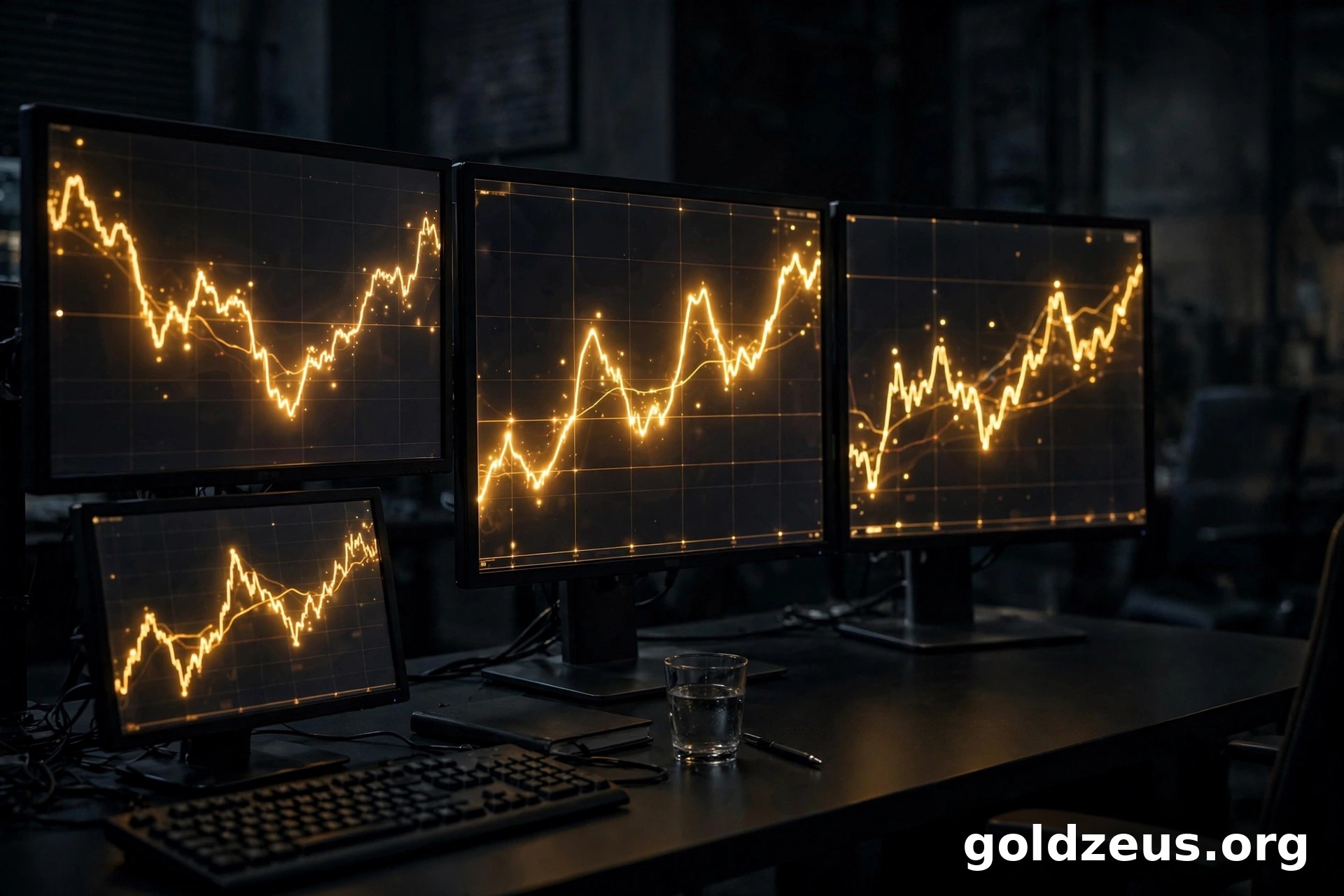
Gold never sleeps — well, almost. From Sydney’s open to New York’s close, gold market prices live tick across screens 23 hours a day. But a live price is only useful if you know where it’s coming from, what it includes, and what to do with it.
This guide covers everything about tracking live gold prices in 2026: the best sources, how to read a live quote, setting alerts, and using real-time data without letting it use you. For a static daily snapshot rather than a live feed, see our guide to gold market prices today.
Quick note: this article is for education only, not financial advice.
What “Live” Actually Means
“Live” prices fall into three tiers:
- Real-time (tick-by-tick): professional terminals and broker feeds — every trade updates instantly
- Streaming (seconds of delay): most dealer pages and finance sites — effectively live for normal use
- Delayed (10–15 min): free exchange quotes and some apps — fine for context, bad for trading
For buying a coin, streaming is plenty. For trading futures, you need real-time. Know which you’re looking at — the fine print usually says.
The Best Sources for Gold Market Prices Live
Exchange feeds (the source of truth)
- CME Group — official COMEX gold futures quotes (delayed free, real-time with subscription)
- MCX India — official Indian gold futures quotes
- LBMA — benchmark prices (twice daily, not tick-level)
Bullion dealers (transactable prices)
Major dealers stream live bid/ask prices you can actually trade at — arguably more useful than exchange prints for physical buyers, since they include the dealer’s live spread.
Financial platforms (charts + context)
Live charts with history, indicators, overlays (dollar index, yields), and news — best for understanding the move, not just seeing it.
Broker apps (for traders)
If you trade gold futures or ETFs, your broker’s app is your live feed — integrated with your orders, which is the point.
Price alert apps
Set-and-forget: get pinged when spot crosses your target instead of watching screens.
How to Read a Gold Market Prices Live Quote
A live gold quote typically shows:
| Element | Meaning |
|---|---|
| Bid | Buyers’ current best price |
| Ask | Sellers’ current best price |
| Spread | Ask minus bid — your instant cost |
| Last/Change | Last trade vs prior close |
| High/Low | Session range so far |
| Volume/Open interest | Futures activity depth |
Watch the spread as much as the price: it widens in fast markets and thin hours — trading then costs more.
Live Prices Around the Clock
Gold’s trading day (typical):
- Asian session: Tokyo/Shanghai open — moderate volume, sets the tone
- London morning: LBMA benchmark, liquidity builds
- London/New York overlap: peak volume — most big moves happen here
- New York afternoon: COMEX drives; economic data drops at 8:30 AM ET
- Overnight: thin; spreads widen; moves can be choppy
Streaming gold market prices live through all five sessions is easy — deciding when to act on them is the hard part. Weekends: markets pause from Friday New York close to Sunday evening. Dealers may quote with wide spreads — treat weekend prices as indicative.
Setting Up Price Alerts That Work
- Pick your trigger: a spot level (“alert me at $3,200”) or a move (“alert on 1% daily change”)
- Choose direction: above, below, or either
- Use dealer + chart alerts: dealer alerts for buying, chart alerts for analysis
- Avoid alert fatigue: three thoughtful alerts beat thirty noisy ones
- Pair with a plan: “if gold hits X, I buy Y amount” — decided before the ping
Using Live Prices Wisely (vs Obsessively)
Live data is a tool, not a hobby:
- Buyers: check live spot + dealer premium at purchase time; ignore the rest of the day
- Long-term holders: weekly checks are plenty — daily ticks are noise
- Traders: live is your oxygen — but trade the plan, not the tick
- Everyone: turn off notifications you don’t act on; attention is capital too
Watching gold market prices live all day rarely helps; acting on a plan does. The research is clear: investors who check prices constantly trade more and earn less. Let the alerts watch; you live your life.
Pitfalls of Live Price Watching
- Spread blindness — the screen price isn’t your price; add spreads and premiums
- Delay confusion — acting on a 15-minute-delayed quote in a fast market
- Emotional trading — red ticks trigger selling; green ticks trigger FOMO
- Overprecision — gold at $3,142.60 vs $3,143.10 doesn’t change any real decision
- Source mixing — comparing a futures print to a dealer ask and wondering why they differ
Frequently Asked Questions
Where can I see gold prices live for free?
Bullion dealer live-price pages and financial charting sites stream effectively-live prices free. Exchanges offer delayed quotes free.
Why does the live price differ between sites?
Different benchmarks (spot vs futures), quote delays, and dealer spreads. Differences of a few dollars are normal.
What time does gold start trading?
Nearly 24 hours on weekdays — Sunday evening US time through Friday afternoon, with a daily break. Weekend trading is minimal.
Are live gold prices accurate?
From reputable sources, yes — they reflect real wholesale markets. Just confirm whether you’re seeing bid, ask, mid, spot, or futures.
Should I buy the moment the price dips live?
Only if it hits your pre-set plan. Impulse dip-buying is how premiums and spreads eat your “bargain.”
Conclusion
Tracking gold market prices live in 2026 is easier than ever — streaming quotes everywhere, alerts on everything. The edge isn’t access; everyone has that. The edge is literacy: knowing bid from ask, spot from futures, signal from noise — and having a plan before the price moves. Set your alerts, know your numbers, and let the market tick away while you get on with the part that actually builds wealth: patience.
