

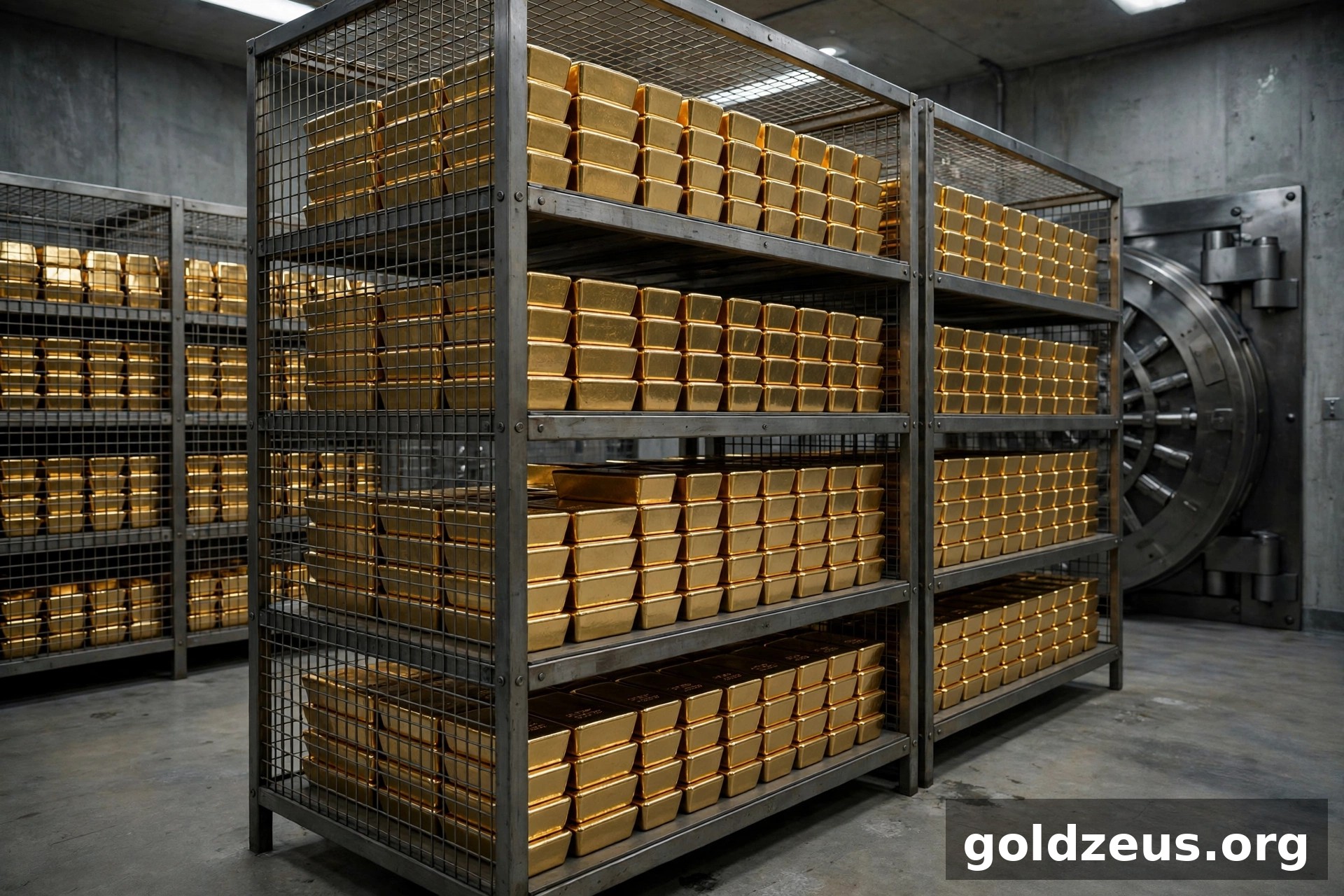
A physical gold ETF is the closest you can get to owning vault gold without renting the vault. Each share is backed by actual bullion bars sitting in secure vaults — audited, insured, and listed by serial number. You trade it like a stock; the fund handles the metal.
In this guide: how physical gold ETFs work, how they differ from futures-based funds, the 6 best options for 2026, what they cost, and how to buy your first share. Before you buy, check the live physical gold price on our market page.
Quick note: this article is for education only, not financial advice.
What Is a Physical Gold ETF?
A physical gold ETF (in the UK/EU often structured as an ETC — exchange-traded commodity) is a fund that:
- Takes investors’ money and buys London Good Delivery gold bars (400oz bars of 99.5%+ purity)
- Stores them in high-security vaults (London, New York, Zurich)
- Issues shares, each representing a fractional claim on that gold
- Publishes the full bar list — every bar’s serial number, weight, and refiner — usually daily
When you buy a share, you’re buying a slice of real metal. The fund’s price tracks the gold spot price minus a small annual fee. In the US they’re ETFs (GLD, IAU, GLDM); in the UK/EU they’re ETCs (SGLN, PHGP) — same economics, different legal wrapper.
Physical vs Futures-Based Gold Funds: Why It Matters
Not every “gold fund” holds gold. Some hold futures contracts — paper bets on future gold prices. Differences that matter:
| Factor | Physical Gold ETF | Futures-Based Fund |
|---|---|---|
| What it holds | Real bullion bars | Futures contracts |
| Tracking | Hugs spot price tightly | Can drift (contango/roll costs) |
| Counterparty risk | Minimal (you own metal) | Higher (contracts with banks) |
| In a crisis | Metal is metal | Paper can gap |
For buy-and-hold investors, physical backing wins. Futures-based funds suit short-term traders, not savers.
The 6 Best Physical Gold ETFs for 2026
1. SPDR Gold MiniShares Trust (GLDM) — Cheapest
The budget champion: real vault gold at around 0.10% a year. Same sponsor family as GLD, fraction of the fee.
- Best for: cost-conscious long-term holders
- Watch out for: smaller than GLD/IAU, though plenty liquid
2. iShares Gold Trust (IAU) — Best All-Rounder
Massive scale, deep liquidity, ~0.25% fee. The default choice in countless portfolios and robo-advisors.
- Best for: investors who want the safe, standard option
- Watch out for: GLDM undercuts it on fee if every basis point counts
3. SPDR Gold Shares (GLD) — Most Liquid
The original (2004) and still the biggest: unmatched daily trading volume. Fee around 0.40% — you pay for that liquidity.
- Best for: large traders and institutions who need to move size
- Watch out for: retail holders overpay versus GLDM/IAU
4. Aberdeen Physical Gold Shares (SGOL) — Vault Choice
Physically backed at ~0.17% with bars stored in Switzerland and London — geographic diversification of custody.
- Best for: investors who care where their bars physically sit
- Watch out for: less name recognition than SPDR/iShares
5. iShares Physical Gold ETC (SGLN) — Best for UK Investors
The UK-listed equivalent: London vaults, ~0.15% ongoing charge, GBP share class. ISA-eligible on UK platforms.
- Best for: UK investors wanting physical gold in pounds
- Watch out for: US investors should stick to the US-listed funds
6. WisdomTree Physical Gold (PHGP) — Europe’s Veteran
One of Europe’s longest-running physical gold products, ~0.15% fee, allocated bars, daily bar lists.
- Best for: European investors wanting an established non-iShares option
- Watch out for: check your broker offers it before deciding
How Vault Backing Actually Works
Skeptical that the gold is really there? The system is surprisingly transparent:
- Allocated bars: specific bars are assigned to the fund — not a vague claim on a pool
- Daily bar lists: serial numbers, refiner, weight, and assay published for anyone to inspect
- Independent audits: vault holdings are audited, typically twice a year
- Insurance: vault operators carry all-risk coverage
- No lending (usually): most physical ETFs don’t lend their gold; check the prospectus
Could a fund lie? In theory. In practice, the biggest funds are run by BlackRock, State Street, and Aberdeen — firms with far more to lose from fraud than to gain.
What Physical Gold ETFs Cost
- Expense ratio: 0.10%–0.40%/year — the fund sells tiny amounts of gold to cover it, so your share’s gold backing slowly declines
- Brokerage commission: often $0 at major brokers now
- Bid-ask spread: fractions of a percent on liquid funds
- Taxes: varies by country — in the US, physical gold ETFs can face the 28% collectibles rate on long-term gains (check current rules); the UK treats ETCs differently. Know your local treatment.
How to Buy a Physical Gold ETF
- Open a brokerage account (or Stocks & Shares ISA in the UK)
- Search the ticker: GLDM, IAU, GLD (US) or SGLN, PHGP (UK/EU)
- Place a market or limit order during exchange hours
- Hold as long as you like — no storage, insurance, or assay worries
Minimum? One share — often under $30. Fractional shares make it even smaller.
Risks of Physical Gold ETFs
- Price risk: gold falls too; the ETF mirrors it faithfully
- Fee drag: small but perpetual — 0.40% compounds over decades
- No yield: like all gold, no dividends or interest
- Tax quirks: collectibles treatment in some jurisdictions; verify locally
- Issuer risk (minimal): you’re exposed to the fund’s operational integrity — stick to giants
Frequently Asked Questions
What is a physical gold ETF in simple terms?
A fund that buys real gold bars, locks them in vaults, and sells you shares representing fractions of that gold. The share price follows the gold price.
Is a physical gold ETF as good as owning gold?
For investment purposes, nearly — you get gold’s price without storage or authenticity worries. You give up the ability to hold coins in your hand and take personal delivery (most funds don’t offer it).
Physical gold ETF vs buying gold coins?
ETFs: cheaper, liquid, no storage. Coins: tangible, private, no counterparty. Many investors hold both.
Can physical gold ETFs go bankrupt?
The gold is held by a custodian for shareholders — it’s not the issuer’s asset. Even if the issuer failed, the metal backing your shares remains.
Which physical gold ETF has the lowest fee?
GLDM (~0.10%) in the US; SGLN/PHGP (~0.15%) in the UK/EU.
Conclusion
Physical gold ETFs solved gold’s oldest problem: owning the metal was a hassle. Now a few clicks buy you audited, insured, vault-stored bullion at fees as low as 0.10% a year. Whether you choose the bargain GLDM, the standard IAU, or the UK’s SGLN, you’re getting the same thing humanity has trusted for millennia — real gold, minus the safe, the assay kit, and the worry.
